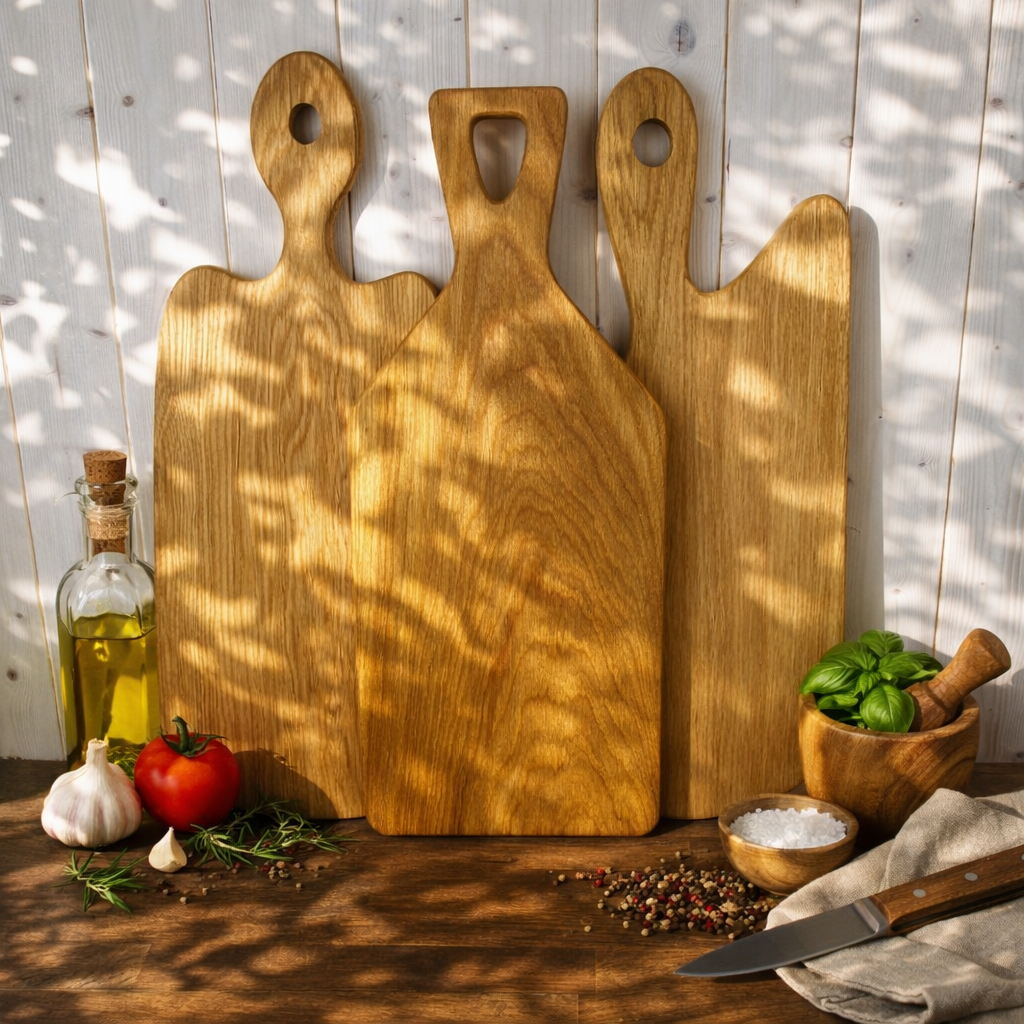
A well-made wooden chopping board is more than just a kitchen accessory – it’s something you’ll use every day for cutting and serving.
With the right care, a quality board can last for years, developing character over time while remaining practical and hygienic.
At Hartwood Timber, our chopping boards are crafted from well selected woods such as oak, iroko, and walnut, with occasional pieces made from other characterful timber such as yew or olivewood. Each one is finished with food-safe oils to protect the timber and enhance its natural grain.
But like any natural material, wood benefits from proper care.
Here’s how to look after your chopping board and keep it performing at its best.
Cleaning your chopping board
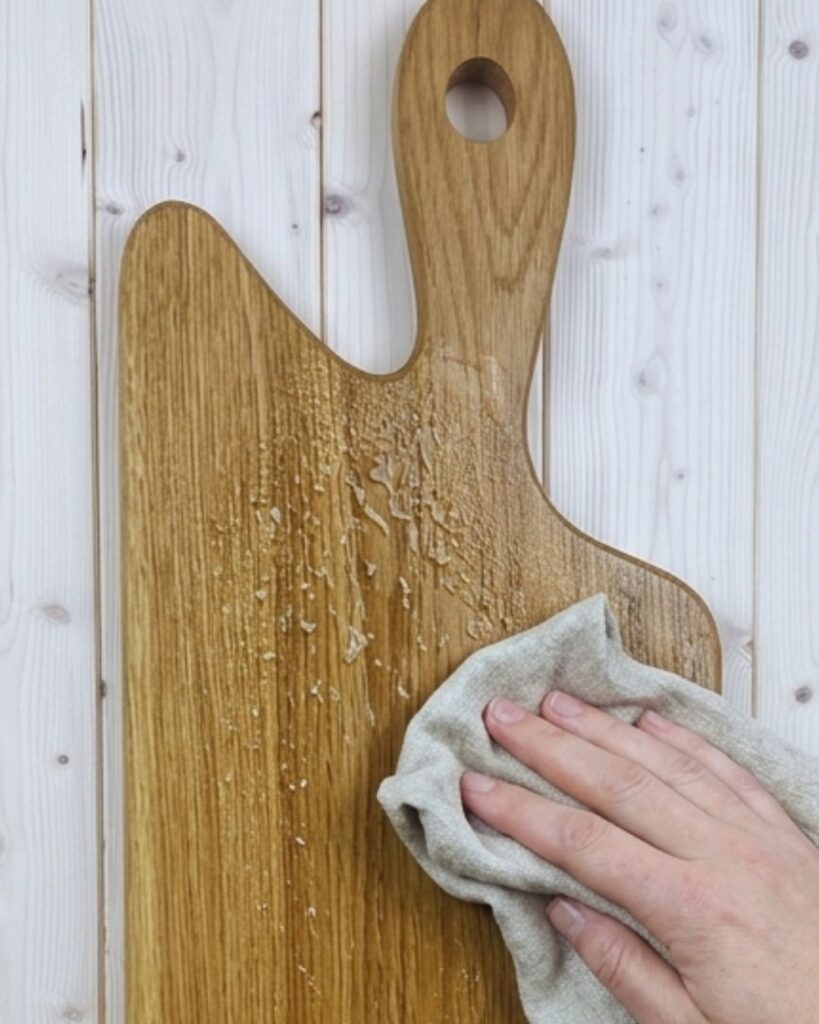
After each use, your board should be cleaned promptly.
Use warm water and a mild washing-up liquid, then wipe clean with a cloth or sponge. Once washed, dry it straight away with a towel rather than leaving it to air dry on a wet surface.
Avoid soaking the board or leaving it sitting in water, as this can cause the wood to swell or warp over time.
What to avoid
Wood is naturally durable, but there are a few things that can significantly shorten the life of your board:
- Dishwashers – The heat and moisture will almost certainly cause warping and cracking
- Prolonged soaking – Even high-quality hardwoods can absorb water if left submerged
- Harsh chemicals or bleach – These can damage the surface and strip protective oils
- Leaving it wet – Trapped moisture can lead to movement in the timber
A little care in day-to-day use goes a long way.
Oiling your board
One of the most important steps in maintaining a wooden chopping board is regular oiling.
All of our boards are treated with food-safe oil before they leave the workshop, but over time this will naturally wear away with use and cleaning.
To keep the timber nourished and protected:
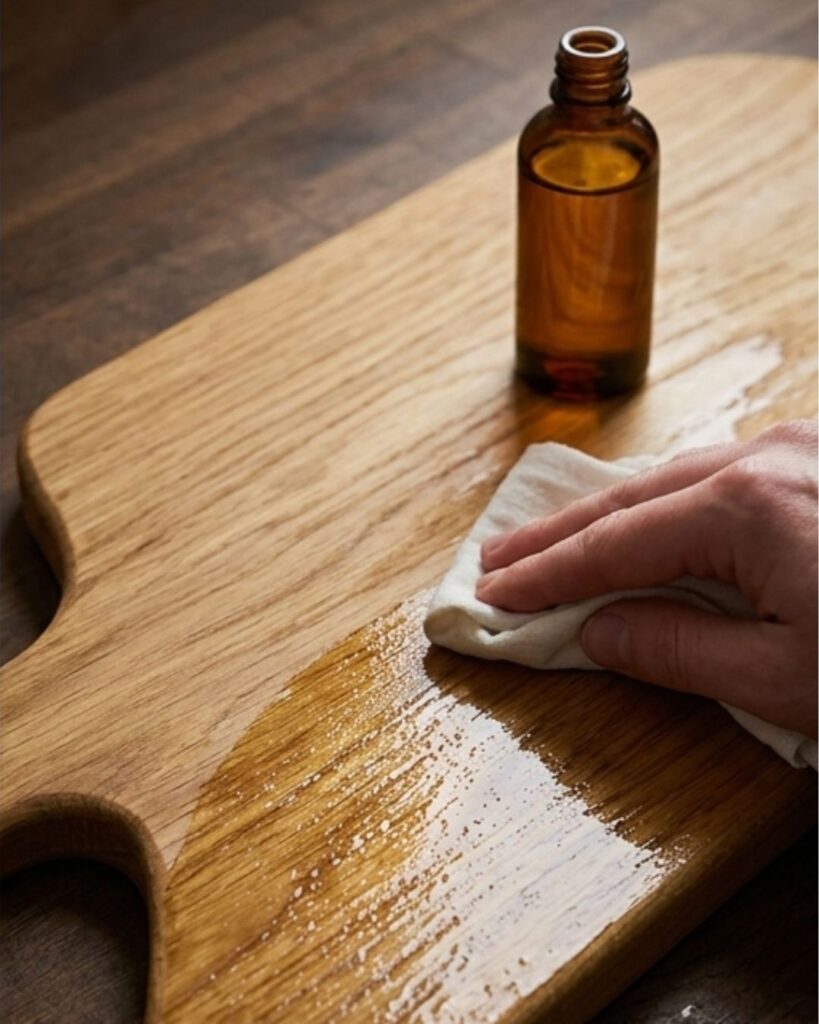
- Apply a food-safe oil when the board begins to look dry or dull
- Use a clean cloth to apply a thin, even coat
- Leave it to soak in for a few hours (or overnight if possible)
- Wipe away any excess oil before use
Regular oiling helps prevent the wood from drying out, reduces the risk of cracking, and keeps the grain looking its best.
Understanding natural timber
Every chopping board we make is unique.
Hardwoods like oak, iroko, and walnut each have their own grain patterns, densities, and tones. Yew and olivewood, when available, bring even more distinctive character.
Because wood is a natural material, it will respond to its environment. Small movements, subtle changes in tone, and the development of a patina over time are all part of its appeal.
These are not flaws – they are signs of a natural material that is unique.
Keeping your board looking its best
To get the most from your chopping board:
- Store it in a dry place with good air circulation
- Stand it upright when possible to allow even drying
- Rotate its use if it has two usable sides
- Re-oil regularly depending on use
With consistent care, your board will not only last longer but continue to look better with age.